As my wonderful pastor preaches through Bible books in his weekly sermons, I enjoy preparing for Sunday worship by reading a commentary on Saturdays about the passage he will preach through the next day. During the most recent sermon series through Revelation, the last book in the Bible, I enjoyed reading Daniel Akin’s commentary, Exalting Jesus in Revelation, part of the Christ-Centered Exposition Commentary series. Below are my thoughts on the commentary series and this particular volume, having recently completed it.
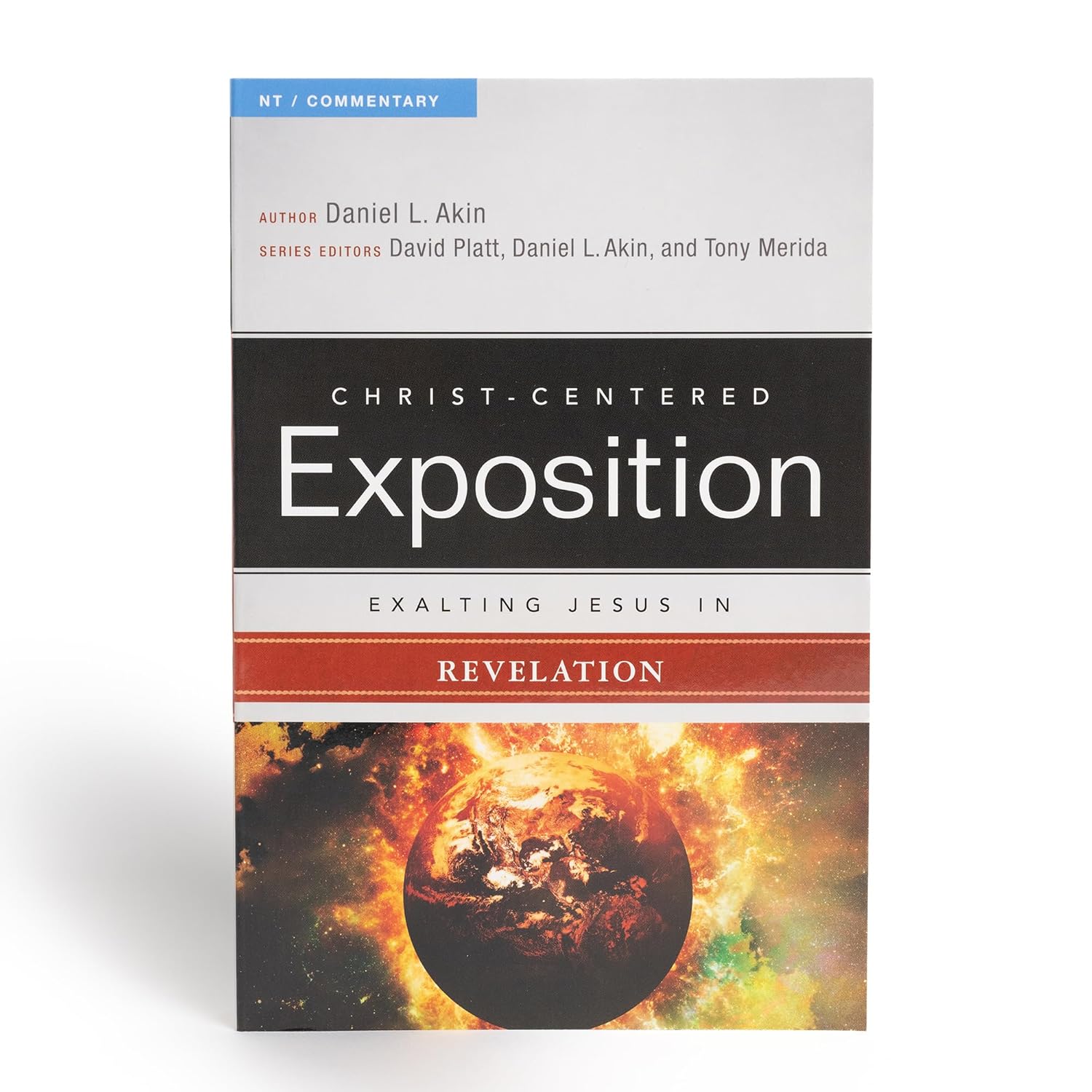
I have benefitted from more than twenty of the Christ-Centered Exposition commentaries through the years. They are easily read and more pastoral in approach than academic. They are helpful for pastors and teachers when planning sermons and lessons from the Bible books covered. I find them to be approachable and inspirational from a layman’s perspective – something that doesn’t always happen with commentaries. This was undoubtedly the case as I slowly read Akin’s Revelation volume in sync with my pastor’s sermon series, which lasted for more than a year.
Revelation is a book that can evoke a wide range of responses. Some shy away from it altogether due to the mysteriousness of the apocalyptic imagery and the differences of opinion in interpretation, which can confuse people and even divide believers who hold conflicting interpretations. Others hold to their specific interpretations of Revelation, not always because they are biblically sound, but perhaps because that is what they were taught years earlier by people they trusted, so why be open to change? One thing is sure: a study through Revelation should at least be interesting and eye-opening, even if the learner comes out on the other side of the study with unanswered questions.
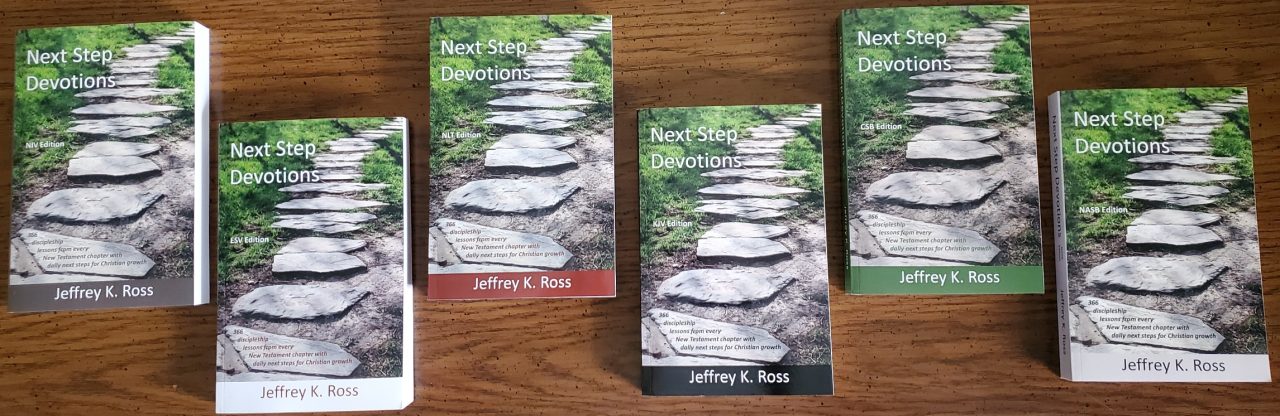
My understanding of what Revelation teaches has changed in recent years. I came to Christ as a teenager in the 1970s when Hal Lindsey’s The Late Great Planet Earth and similar titles were popular. My first serious Bible, given to me by my high school freshman Sunday School teacher, was a Scofield Reference Bible, with its dispensational view of a pre-tribulation rapture of the church, inspired more by John Nelson Darby in the 1800s than by sound scriptural exegesis. However, when studying for and writing the 33 Devotions from Revelation in my Next Step Devotions book, I realized that what I was taught as a teenager about Revelation wasn’t the only way to understand what the Holy Spirit inspired the apostle John to write. I have continued to learn and am still open to learning more on the subject. After all, if my understanding could change a couple of years ago when I was in my mid-60s, it may change more as I continue to learn.
Given that background, I eagerly read Akin’s Exalting Jesus in Revelation, expecting to agree with some things and disagree with others, but I was open to learning and being convinced as a lifelong learner and disciple of Jesus. That seems to be a helpful posture for life, assuming that Scripture is the ultimate authority by which we are convinced of doctrinal truth.
Akin, president of Southeastern Baptist Theological Seminary, analyzes Revelation’s 22 chapters in 32 sections. As is characteristic of all volumes in the Christ-Centered Commentary series, each chapter is clearly outlined and begins with a concise main idea. Each chapter concludes with several questions for reflection and discussion. The simple, consistent, organizational approach helps the reader organize one’s thoughts.
Since I was not reading the book to prepare lessons or sermons but for my edification and to prepare to hear more from my pastor as he preached, I found reading the book to be most helpful where there were little gems of truth scattered that I might share with my community group as we discussed that day’s sermon later on Sunday evening. Akin doesn’t disappoint in providing many such insights along the way.
While I may disagree with Akin on the details of interpreting specific passages, he is gracious in presenting his views, always generous in respecting those who interpret differently, and frequently quotes other scholars to support his position. That makes it easy to consider what is presented in a friendly way, not adversarial as others can sometimes be in their “I’m-right-and-you’re-wrong” approach to interpretation that harms more than helps the reader.
I highly recommend this and other volumes in the Christ-Centered Exposition Commentary series. They are practical, informative, readable, and worthwhile. I will use many additional, substantive resources when teaching or preparing for public speaking, but this series is excellent for a quick overview of what the text says and means. I wish the books included more actual Scripture quotations than they do, but that absence simply requires me to have an open Bible beside me as I read, and that isn’t a bad thing. Whether you are exploring Revelation or any other book currently included in this commentary series, I recommend them as helpful resources to add to your arsenal of learning tools.
