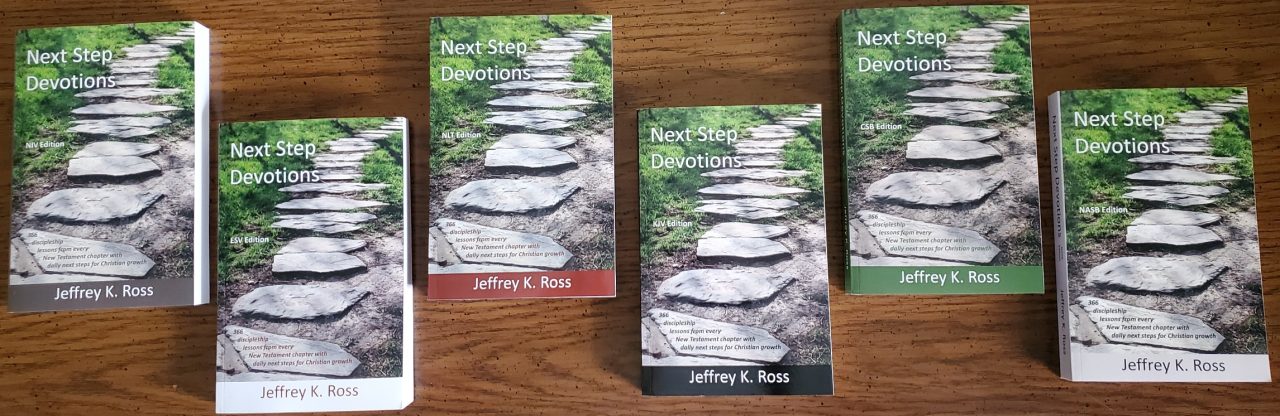
(The following is the May 29 devotional from my Next Step Devotions book. Before reading it, I suggest you read Acts 17 and pay close attention to verses 10-12.)

How can we know that teachings from pastors, teachers, friends, books, media, and other sources are biblically accurate? We do what the Bereans did when Paul and Silas taught in their synagogue. “They received the word with eagerness and examined the Scriptures daily to see if these things were so” (v. 11). Scripture then consisted of what we now call the Old Testament. Throughout much of the world, we now have ready access to numerous print and electronic copies and translations of the Bible’s Old and New Testaments. This access makes possible the verification of teachings anytime, anywhere.
We shouldn’t rely solely on the word of others – even trusted leaders, family, and friends – when it comes to biblical truth. We have in written form the very Word of God. It should be our habit and joy to dig into it regularly to uncover its treasure trove of truth. When we do, the Holy Spirit is eager to guide us into all truth (John 16:13).
Many Christians are blessed to have several trusted sources of Christian wisdom and guidance – people and published media. We should thank God for them, listen to them, and learn from them. But we must never let any source take the place that only God’s Word deserves as authoritative in all matters of faith and practice.
It behooves Christians to know the Bible so well that we immediately identify any false teaching inconsistent with it.
Next Step:
Are there faith-related teachings you have heard from others that you are not convinced are biblical? Examine the Bible to learn what it teaches on those subjects. Remember that extrabiblical resources such as commentaries, online searches, or other study aids may be right or wrong in their biblical interpretation.
