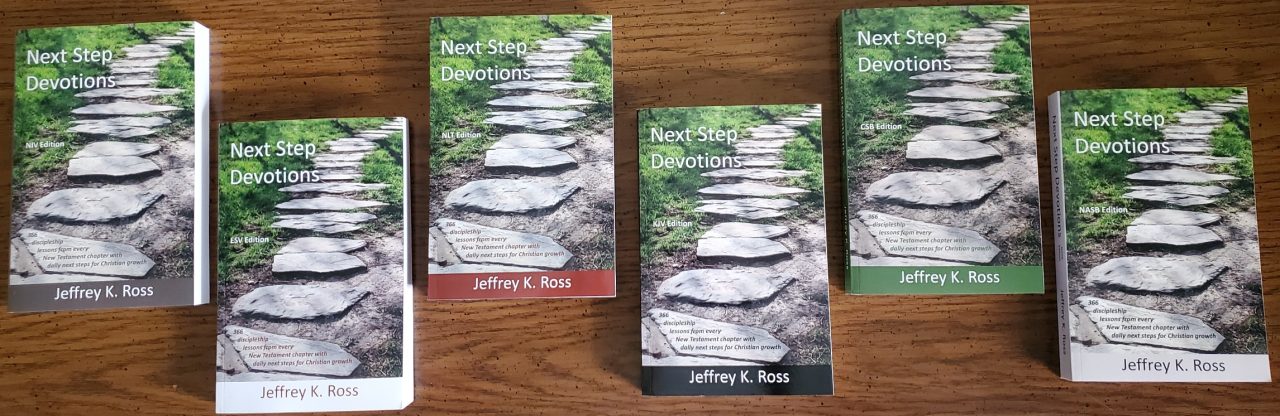
(The following is the June 21 devotional from my Next Step Devotions book. Before reading it, I suggest you read Romans 6 and pay close attention to verses 15-23.)

Because slavery was common in the culture at the time of writing, the New Testament uses such language to illustrate spiritual truths. When Paul contrasts life before knowing Christ with life after conversion, he speaks of formerly being “slaves of sin” (v. 17) and the dire consequences of remaining in such a state. He contrasts that with “having been set free from sin” and becoming “enslaved to righteousness” (v. 18).
Salvation is ultimately the work of God, not humans, but individuals actively participate in the process. “Don’t you know that if you offer yourselves to someone as obedient slaves, you are slaves of that one you obey – either of sin leading to death or of obedience leading to righteousness?” (v. 16). Moving from sin’s enslavement to righteousness in Christ requires that we surrender ourselves to him completely. Once we surrender, Christ is our master. We eagerly yield control of our life to him, and there is no better, safer place to be than under the care and direction of our loving Lord.
Many churches include a time in corporate worship when individuals can make public professions of faith. What we call these moments in worship matters because language matters. My personal preference is to refer to these as times of surrender. When we come to Christ, we do not merely make a “decision” or a “commitment” to Christ because we can make a conflicting decision or commitment tomorrow. Instead, we surrender ourselves to the lordship of Christ. A soldier who surrenders to another power is no longer in control of what happens to him, and the one who fully submits to Christ becomes “enslaved to God” (v. 22).
Being a Christian isn’t a makeover; it’s a takeover.
Next Step:
Have you fully surrendered your life to Christ, or have your “decisions” and “commitments” been temporary and less meaningful?
