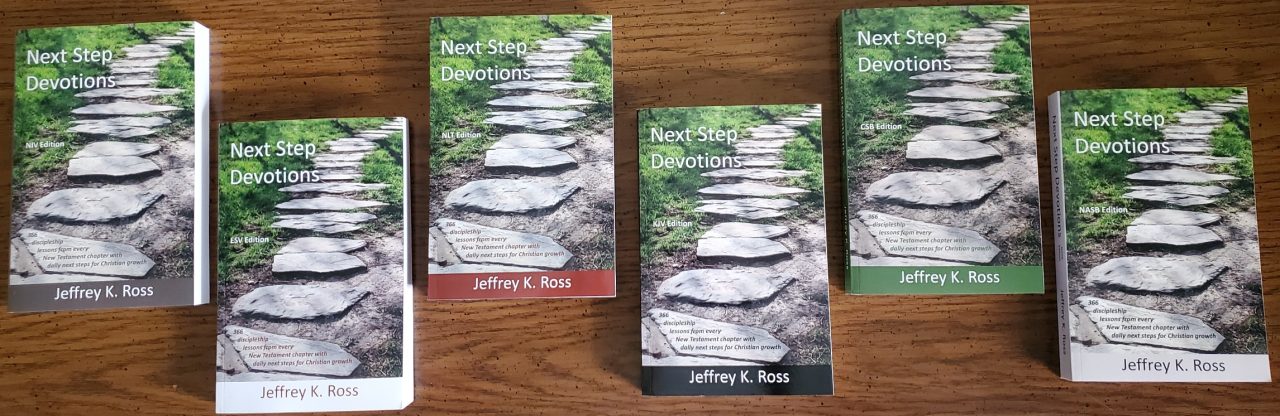
(The following is the July 2 devotional from my Next Step Devotions book. Before reading it, I suggest you read Romans 14 and pay close attention to verses 1-12.)

Scripture documents many behaviors expected of Christians. We should not doubt the continuing applicability of God’s moral commands. Likewise, there are many warnings to avoid specific sins. What the Bible calls sin is still sin and must be rejected by believers from all cultures for all time. But are there gray areas not addressed in Scripture where what is sinful for one person is not necessarily so for another? If so, how do we handle these issues?
In Romans 14, Paul acknowledges that, in some matters, believers may disagree about how to act. His examples include eating certain foods and observing special religious days – common concerns to first-century believers due to their culture and history. While Paul associates some views with being less mature or weaker in the faith, he reminds the reader, “Before his own Lord he stands or falls” (v. 4). He adds, “Let each one be fully convinced in his own mind” (v. 5). Paul gives fellow believers the benefit of the doubt that each intends to honor the Lord in their actions. Ultimately, he reminds us that “each of us will give an account of himself to God” (v. 12). As we live out our Christian faith, we may interpret and apply some teachings differently than other believers. That is acceptable as long as we do not directly contradict clear instructions found elsewhere in the Word.
Along the way, we must be careful to separate from Christian expectations any rules that relate, for example, to Jewish ceremonial laws or civil laws Israel might have lived by in biblical times. Those laws do not apply to modern Christians. Our concern is God’s moral law as found in the Ten Commandments and elsewhere, especially in the New Testament.
Next Step:
Identify examples of gray areas where you may differ from other believers about the morality of certain behaviors. What scriptural teachings and principles help address such situations?
